Blog
  • API 610 OH2 vs BB2 Pumps: Key Differences and Selection Guide May 09, 2026
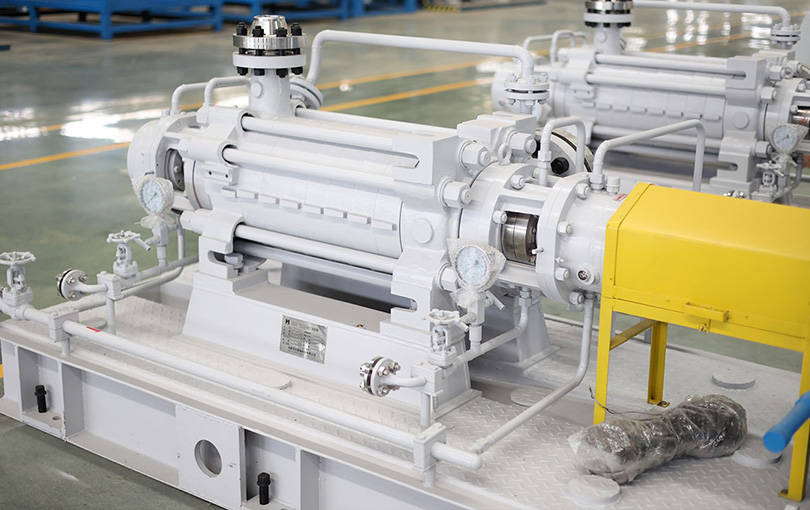
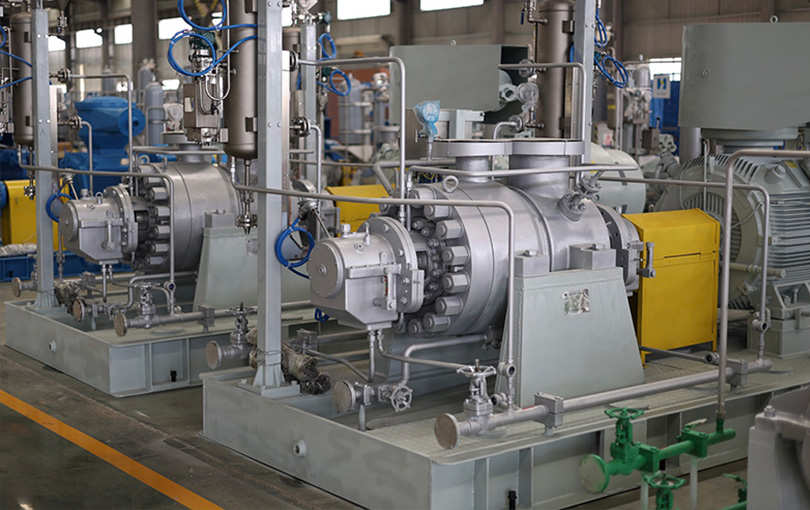
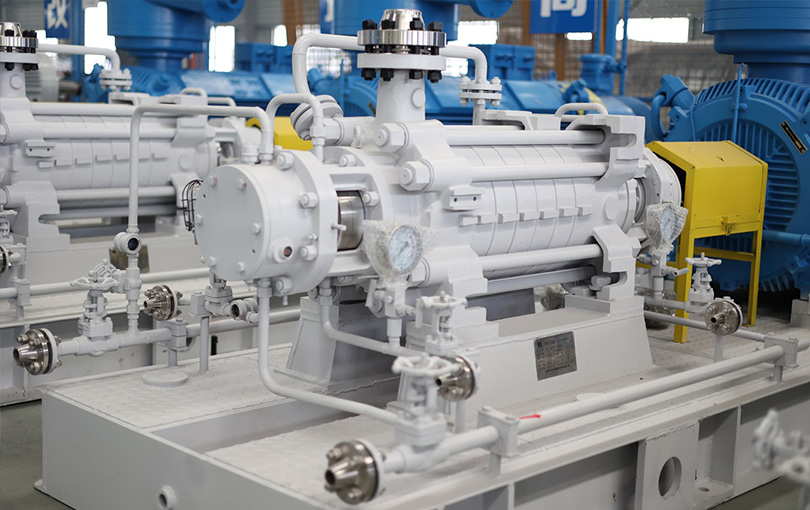
    1. Introduction In refinery and petrochemical applications, selecting the right pump type is critical for ensuring reliability, efficiency, and long-term operation. Among the various pump types defined in API 610, OH2 and BB2 pumps are two of the most commonly used configurations. Although both are centrifugal pumps designed for demanding services, their structural differences make them suitable for different operating conditions. This article explains the key differences between OH2 and BB2 pumps and provides practical guidance for selection. 2. What is an OH2 Pump? An OH2 pump is a single-stage, overhung, horizontal centrifugal pump with a centerline-mounted casing. Key characteristics: l Overhung impeller design (impeller mounted at shaft end) l Single bearing housing l Flexible coupling to driver l Centerline support for thermal stability Typical applications: l General refinery services l Medium pressure and temperature fluids l Clean or slightly contaminated liquids 3. What is a BB2 Pump? A BB2 pump is a single-stage, between-bearings centrifugal pump, typically with a radially split casing. Key characteristics: Impeller located between two bearings Double-bearing support for higher shaft rigidity Better load distribution Designed for higher pressure services Typical applications: High-pressure hydrocarbon services Critical process units Applications requiring high reliability 4. Key Differences Between OH2 and BB2 Pumps 5. Application Comparison When to use OH2 pumps: l General process services l Moderate pressure and temperature l Cost-sensitive projects l Easier maintenance required When to use BB2 pumps: l High-pressure systems l Critical units (e.g., hydrocracking, boiler feed) l Continuous operation with minimal downtime l Applications requiring higher mechanical stability   6. Selection Guide   Choosing between OH2 and BB2 pumps depends on several key parameters: 1. Operating Pressure Medium pressure → OH2 High pressure → BB2 2. Reliability Requirement Standard duty → OH2 Critical service → BB2 3. Fluid Conditions Clean / low viscosity → both suitable Severe conditions → BB2 preferred 4. Maintenance Strategy Frequent maintenance acceptable → OH2 Long continuous operation required → BB2 5. Budget Consideration Lower CAPEX → OH2 Higher initial cost but longer lifecycle → BB2   7. Practical Example In refinery applications: OH2 pumps are often used in: Transfer services Utility systems Light hydrocarbon handling BB2 pumps are typically selected for: High-pressure feed systems Reactor charging Critical process circulation   8. Conclusion Both OH2 and BB2 pumps play essential roles in petrochemical and refinery industries. The choice between them should not be based solely on cost, but on a comprehensive evaluation of operating conditions, reliability requirements, and lifecycle considerations. In general: OH2 = flexibility + lower cost BB2 = stability + high reliability   9. Need Technical Support? If you are selecting pumps for refinery or petrochemical applications and are unsure whether OH2 or BB2 is the better choice, feel free to contact us. We can provide: Pump selection support API 610 compliant solutions Customized designs for critical applications
  • How to Select the Right Chemical Process Pump for Your Project
    How to Select the Right Chemical Process Pump for Your Project Jul 04, 2025
    When you are in charge of procuring equipment for a chemical or petrochemical project, choosing the right Chemical Process Pump is a critical decision. The pump you select will directly impact production efficiency, plant safety, maintenance costs, and even your environmental compliance. Here are some essential factors to consider when selecting a chemical process pump that meets your project needs.   1. Define Your Process Requirements   First, clearly define the medium you will be handling. Is it corrosive? Does it contain solids? What is its viscosity and temperature? Understanding the physical and chemical characteristics of your pumped fluid is the cornerstone of any pump selection. It is also crucial to identify flow rate, pressure, and system design. 2. Consider Materials of Construction   Chemical process pumps must be built with materials that can withstand corrosive or abrasive fluids. Popular choices include stainless steel, duplex steel, or specialty alloys, as well as engineered plastics for specific corrosive environments. Selecting the correct material will extend the pump’s lifetime and avoid unplanned shutdowns. 3. Evaluate Seal and Shaft Design   Seal failure is a common cause of pump downtime. Depending on whether you have toxic, hazardous, or volatile chemicals, you may require single or double mechanical seals, or even magnetic drive sealless designs to minimize leakage risk. Talk to your supplier about the best sealing solutions for your application.     4. Energy Efficiency and Lifecycle Costs   Modern chemical plants are increasingly focusing on energy-saving initiatives. Look for pumps with high hydraulic efficiency, and do a lifecycle cost analysis that considers not just purchase price, but also power consumption, maintenance, and spare parts availability over the equipment’s lifetime. 5. Supplier Support and Service Network   Reliable after-sales service is vital. Choose a pump manufacturer with a robust global service network, spare parts availability, and proven support for troubleshooting, training, and upgrades. This ensures your investment is protected over the long term. 6. Standards and Certifications   Check whether the pump complies with relevant international standards, such as ISO 2858, API 610, or ANSI B73.1, depending on your industry. Certifications not only demonstrate quality but can also streamline project approval processes. Conclusion Choosing the right chemical process pump is about far more than initial purchase price. By thoroughly analyzing process parameters, construction materials, sealing systems, and lifecycle costs, you can maximize plant performance, reduce maintenance headaches, and meet strict environmental and safety requirements. If you would like tailored recommendations for your next project, feel free to contact our team — we’re ready to support you with best-in-class pumping solutions.
  • Our Blueprint for Global Partnership: From the Russian Market to the Middle East and Beyond
    Our Blueprint for Global Partnership: From the Russian Market to the Middle East and Beyond Jun 26, 2025
    In today's interconnected world, the most successful projects are built on a foundation of trust and true partnership. A supplier shouldn't just be a name on an invoice; they should be a reliable partner invested in your success, regardless of geography or market complexity. Hefei Huasheng (CNHS) has built its reputation on this very principle. Our journey from a domestic leader to a trusted international partner is a story of ambition, reliability, and a commitment to growing with our clients. Proven Success, Global Ambition Our significant achievements in the dynamic Russian market were just the beginning. We proved that our technology, quality, and project management expertise could meet the highest international standards. Now, we are taking the next step in our global journey: establishing a joint venture factory in Saudi Arabia. This move isn't just about expansion; it's a strategic commitment to our partners in the Middle East. It means: Localized Expertise: Having a local presence allows us to better understand the unique challenges and requirements of the region. Improved Logistics and Support: We can provide faster delivery, more responsive service, and on-the-ground technical support for our clients' most critical projects. Building Lasting Relationships: We believe in working hand-in-hand with our partners, from initial design to commissioning and beyond. Whether you are in Europe, Asia, or the Middle East, our door is always open. We invite you to be part of our journey. As we continue to expand our global footprint, we are actively seeking partners who share our vision for quality, innovation, and mutual success.
  • The Smart Revolution: How Intelligent Pumps Are Redefining Plant Efficiency
    The Smart Revolution: How Intelligent Pumps Are Redefining Plant Efficiency Jun 26, 2025
    For decades, the industrial pump has been a model of mechanical reliability. But in an era of digital transformation, what if we could ask more of it? What if a pump could not only move fluid but also provide data, predict its own maintenance needs, and integrate seamlessly into a smart factory ecosystem? At Hefei Huasheng (CNHS), this is not a future concept—it's today's reality. We are at the forefront of the intelligent pump revolution, embedding technologies like AI, IoT, and Big Data into the heart of our industrial solutions. From Mechanical Workhorse to Intelligent Asset Our recent SINOPEC Science and Technology Progress Award for our "Intelligent Inspection Robot and Management Platform" is a perfect example of our vision. This isn't just about automation; it's about transforming a plant's entire maintenance philosophy from reactive to predictive. Here’s how our smart technology creates value: Predictive Maintenance: Our integrated sensors monitor vibration, temperature, and performance in real-time. Advanced algorithms analyze this data to predict potential failures before they happen, allowing you to schedule maintenance proactively, saving millions in potential downtime and repair costs. Enhanced Safety: Intelligent monitoring and inspection robots can access hard-to-reach areas, reducing the need for manual inspections in hazardous environments and ensuring your team stays safe. Optimized Performance: By collecting and analyzing operational data, our systems help you understand exactly how your pumps are performing. This allows for fine-tuning that can significantly reduce energy consumption and improve overall plant efficiency. The future of industrial operations is intelligent. With over 100 patents and a relentless drive for innovation, we are building the smart solutions that will power the petrochemical plants of tomorrow.
  • Beyond the Standard: Why Our API 610 Pumps Are the Cornerstone of Petrochemical Reliability
    Beyond the Standard: Why Our API 610 Pumps Are the Cornerstone of Petrochemical Reliability Jun 26, 2025
    In the high-stakes world of petrochemical processing, there is no room for error. Plant safety, operational efficiency, and profitability all depend on the reliability of every single component. At the heart of these operations lies the centrifugal pump, a workhorse that must perform flawlessly under extreme conditions. This is why the API 610 standard is not just a benchmark—it's a promise of safety and robustness. At Hefei Huasheng Pumps & Valves (CNHS), we see the API 610 standard not as a finish line, but as our starting point. Meeting the Standard is Mandatory. Exceeding It is Our Mission. Any manufacturer can claim to build to a standard. However, true reliability is forged in a culture of excellence and continuous innovation. For us, this means: Advanced Materials Science: We utilize superior alloys and materials that offer enhanced resistance to corrosion, abrasion, and extreme temperatures, ensuring a longer operational life and reducing downtime. Precision Engineering: Our state-of-the-art manufacturing facilities, operated by over 90 R&D engineers, produce components with microscopic precision. This minimizes vibration, reduces wear and tear, and guarantees performance that you can count on, year after year. Rigorous Testing: Every pump that leaves our facility has undergone a battery of tests in our 6,000+ m² product test center. We simulate the harshest operational conditions to ensure that when your pump arrives on-site, it is ready for anything. A Partner in Your Project's Success Choosing a pump supplier is about more than just a product; it’s about choosing a partner. Our success in demanding markets and our leadership role in drafting national industry standards are testaments to our expertise. We provide more than just equipment; we provide the confidence and peace of mind that your critical operations are in safe hands. When reliability cannot be compromised, look beyond the standard.
  • What is the Application Differences between BB4 and BB5 pumps
    What is the Application Differences between BB4 and BB5 pumps May 26, 2025
    BB4 Pump Applications BB4 pumps find applications in various industries. In the oil and gas sector, they can be used for general fluid transfer within refineries. In the power generation industry, they are suitable for 210 °C - below boiler feed water in combined - cycle power plants, solar - energy - related applications, and as start - up boiler feed pumps in general - purpose thermal power plants. They are also used as high - pressure water pumps in general industries. For example, in a paper - pulp and paper mill, BB4 pumps can be used for pumping process water.     BB5 Pump Applications BB5 pumps are mainly used in more demanding and high - risk applications. In the hydrocarbon and petrochemical industries, they are used for critical processes such as boiler feed water in large - scale refineries, seawater injection in offshore oil platforms, and in gas plants and pipelines. In the emerging field of carbon capture, utilization, and storage (CCUS), BB5 pumps play a vital role due to their ability to handle high - pressure and high - temperature fluids involved in the CO₂ capture and transportation processes.     In conclusion, while both BB4 and BB5 pumps are important in industrial pumping, their structural, performance, and application characteristics are distinct. When choosing between the two, factors such as the operating conditions (temperature, pressure, flow rate), the nature of the fluid being pumped, and the specific requirements of the industrial process must be carefully considered to ensure optimal performance and reliability.
  • What is the Performance Differences between BB4 and BB5 pumps
    What is the Performance Differences between BB4 and BB5 pumps May 15, 2025
    Flow and Head BB4 Pumps typically have a flow rate (Q) ranging from 15 to 1000 m³/h and can achieve a head (H) from 180 to 2600 m. They are designed to handle a relatively wide range of flow and head requirements, making them suitable for many general - purpose industrial applications. BB5 pumps, in comparison, can handle even higher flow rates, with some models capable of exceeding 4400 USgpm (about 1000 m³/h), and they can reach heads beyond 12000 ft (around 3660 m). This makes BB5 pumps ideal for applications that demand extremely high - volume and high - head pumping, such as in large - scale oil and gas pipelines or high - pressure boiler feed systems.   Hefei Huasheng API 610 BB4 Pump   Temperature and Pressure Resistance BB4 pumps are generally suitable for temperatures ranging from - 80 °C to + 220 °C. They are designed to operate under normal to moderately high - temperature conditions in industrial processes. BB5 Pumps can handle much higher temperatures, up to 840 °F (450 °C), and have a standard design working pressure of 2250 psig (15000 kpag). Their robust double - casing construction enables them to endure these harsh temperature and pressure conditions, which are often found in applications like carbon capture, utilization, and storage (CCUS) and high - temperature hydrocarbon processing.   Hefei Huasheng API 610 BB5 Pump
  • What is the Structural Differences between BB4 and BB5 pumps
    What is the Structural Differences between BB4 and BB5 pumps May 06, 2025
    When it comes to pumps in industrial applications, understanding the differences between various types is crucial for making the right selection. In this blog post, we will explore the disparities between BB4 and BB5 pumps, two common types in the industry.     Hefei Huasheng BB4 Pumps   BB4 pumps are single - casing, segmented, and horizontally multi - stage centrifugal pumps with the impellers arranged in the same direction. They are designed according to the API610 standard for the oil, heavy chemical, and gas industries. The horizontal center - line support of BB4 pumps helps in better stability during operation. The casing of BB4 pumps is of a single - shell design. This design makes them relatively more straightforward in construction compared to some other models. For example, the flange of BB4 pumps complies with ANSI/DIN/ISO standards, and the mechanical seal cavity dimensions are in line with ISO21049 (API682).   When to choose BB4? If your application requires high pressure but is within a stable range where a double-casing is not mandatory for safety, the Hefei Huasheng BB4 Pump is a robust and cost-effective choice.     Hefei Huasheng BB5 Pumps   BB5 pumps, on the other hand, are double - casing, specifically barrel - type pumps. They are also multi - stage and horizontally installed with a radial or axial split inner casing and two - end support. The double - casing design of BB5 pumps provides an extra layer of protection and is more suitable for applications where high - pressure and high - temperature conditions are prevalent. These pumps meet the stringent specifications of API Standard 610 latest edition. The outer barrel casing of BB5 pumps is heavy - duty, which can withstand high internal pressures.     When to choose BB5? For critical services where safety is paramount and pressures are extreme, the Hefei Huasheng BB5 Pump is the industry standard. Its barrel design ensures that even if the inner casing leaks, the outer barrel contains the fluid.   Feature BB4 Pump BB5 Pump Structure Single-casing, Segmented (Ring Section) Double-casing (Barrel Type) Casing Split Radial split Radial split (Inner & Outer) Pressure Rating Medium to High Pressure Ultra-High Pressure Temperature Standard High Temp Extreme High Temp Maintenance Requires disassembly of segments Cartridge pull-out (Easier for internal access) Typical Cost More Cost-Effective Higher Initial Investment Best Application Boiler feed, Refineries, Chemical transfer Hydrocracking, High-pressure injection Our Models [View BB4 Series ->] [View BB5 Series ->]   Summary: Which One Should You Buy?   Choose BB4 if you need a reliable, high-pressure pump for standard refinery or boiler feed applications and want to optimize your budget. Choose BB5 if your process involves dangerous fluids, extreme pressures, or requires the highest level of safety redundancy (Double Casing).
  • Reactor Circulation Pumps (Ebullated pump) produced by Hefei Huasheng Pumps & Valves
    Reactor Circulation Pumps (Ebullated pump) produced by Hefei Huasheng Pumps & Valves Apr 18, 2025
    At the heart of every industrial process lies a powerful engine—the pump. In critical sectors like petroleum refining, petrochemicals, metallurgy, and seawater desalination, reliable and efficient pumping solutions are indispensable. One such vital piece of equipment is the reactor circulation pump, also known in the industry as the “Ebullated pump,” a key player in transforming heavy residue oil into clean fuels.  Hefei Huasheng Pumps & Valves Co., Ltd has dedicated itself to deep technological research and product development, following the path of specialization, refinement, distinctiveness, and innovation. We've independently developed more than 40 types of import-substitution products, including hydraulic turbines and loop reactor axial flow pumps, tackling major bottlenecks in fluid machinery for the chemical industry. Reactor Circulation Pumps (Ebullated pump) is one of them.   We often refer to pumps as the "heart of mechanical equipment", providing the necessary power for liquid transportation. But the Reactor Circulation Pumps (Ebullated pump) does much more than that - it drives chemical transformations that can significantly improve resource efficiency. In the petroleum and chemical industries, it is powerful enough to be called the "Wizardly Pump".
  • U.S. Expands Sanctions on Entities Linked to Nord Stream 2 Pipeline
    U.S. Expands Sanctions on Entities Linked to Nord Stream 2 Pipeline Dec 23, 2024
    Washington, D.C. (Reuters) – The United States has introduced new sanctions targeting several Russian entities connected to the Nord Stream 2 gas pipeline project, including additional measures against the pipeline’s operator, the State Department announced on Wednesday.     The statement revealed that sanctions were being re-imposed on entities previously designated for their role in constructing the pipeline, alongside newly identified vessel owners already under sanction. Key targets include Russian marine service providers, water transport companies, the state-owned maritime rescue service, and over a dozen vessels. Additionally, Nord Stream 2 AG, the pipeline operator, and a Russian insurer involved in underwriting activities for companies participating in the project were sanctioned. Deputy State Department Spokesperson Vedant Patel reaffirmed U.S. opposition to Nord Stream 2, describing it as a geopolitical tool of Russia and stressing continued resistance to any efforts to revive the pipeline.     "We remain committed to preventing Russia from exploiting its energy resources as leverage for political gain," Patel emphasized during a press briefing. Constructed by Russia's state-controlled Gazprom under the Baltic Sea, the Nord Stream 2 pipeline was designed to transport Arctic natural gas to Germany. However, it suffered significant damage on September 26, 2022, following Russia’s invasion of Ukraine earlier that year. No party has officially claimed responsibility for the damage. The project has faced criticism from Washington long before the conflict, as it enabled Russia to bypass Ukraine, potentially stripping the country of vital transit revenue while weakening its stance against Russian aggression.     Western speculation has suggested the possibility of Moscow sabotaging its own pipeline—a theory dismissed by Russian President Vladimir Putin as "absurd." Meanwhile, a report from The Washington Post indicated that U.S. intelligence had prior knowledge of a Ukrainian plan to target Nord Stream 2 months before the incident. In response, Russia has accused the United States, Britain, and Ukraine of orchestrating the explosions, which severed a major Russian energy link to the European market. These nations have denied any involvement. The escalation in sanctions marks a continued effort by the U.S. to curtail Russia’s energy dominance and its ability to use natural resources as political tools amid the ongoing geopolitical tensions.
  • The Impact of AI on the Energy Sector Insights from ADIPEC 2024
    The Impact of AI on the Energy Sector Insights from ADIPEC 2024 Nov 11, 2024
    This week, approximately 180,000 professionals gathered in Abu Dhabi for ADIPEC, the oil-and-gas industry’s largest annual event. This year’s theme spotlighted the intersection of artificial intelligence (AI) and energy, drawing leaders from tech, energy, and finance to discuss AI's transformative potential in the sector. Sultan Al Jaber, CEO of ADNOC, hosted a private meeting with major tech and energy executives, underscoring the collaboration between these industries.     A survey released during the event, involving over 400 experts, suggests that AI could enhance energy efficiency and reduce greenhouse-gas emissions, aligning with global sustainability goals. However, beyond long-term environmental benefits, many energy leaders foresee an immediate opportunity: a surge in demand for natural gas due to the AI-driven expansion of data centers. As tech giants race to build data centers capable of handling advanced AI workloads, natural gas has become essential for meeting their vast energy needs. Industry leaders such as Murray Auchincloss, CEO of BP, and Mike Wirth, CEO of Chevron, have acknowledged that the rapid growth of hyperscale data centers is directly driving demand for natural gas. Goldman Sachs predicts that the American data center market will require an additional 47 gigawatts (GW) of power capacity by 2030, with 60% of this demand likely to be met by natural gas and 40% by renewable energy sources. However, this reliance on natural gas presents a challenge for tech firms committed to achieving net-zero emissions. Some tech companies have warned they will shift their data center projects to regions that offer cleaner energy alternatives. This dilemma has pushed major technology firms to invest heavily in renewable energy projects, with companies like Microsoft entering into multi-billion-dollar partnerships to develop renewable energy sources for their operations. The environmental impact of natural gas use is also under scrutiny. Although natural gas emits significantly less greenhouse gas than coal, this benefit is offset by methane emissions from the production and transportation processes. Methane, a potent greenhouse gas, is released through venting and flaring during extraction, compounding its environmental impact. The World Bank reports that methane flaring increased by 7% in the global oil-and-gas industry from 2022 to 2023, while other studies estimate methane emissions in the U.S. are substantially higher than government calculations. In response, some oil and gas companies have committed to reducing methane emissions, yet progress has been gradual. Tech firms face a difficult choice: meet immediate data center demands by relying on natural gas or invest in clean energy solutions to fulfill their sustainability pledges. Major tech players, such as Microsoft, are already developing renewable power sources to support their data center needs, signaling a move towards sustainable growth even amidst the rapid rise of AI. For now, the energy sector remains a significant beneficiary of the AI boom, with growing demand for natural gas boosting opportunities. This partnership between AI and energy will continue to shape the industry, potentially accelerating the transition towards a cleaner and more efficient future.  
  • Hydrocracking Bubbling Bed Technology: A Key Solution for Heavy Oil Processing and Sustainable Energy Development
    Hydrocracking Bubbling Bed Technology: A Key Solution for Heavy Oil Processing and Sustainable Energy Development Oct 14, 2024
    Hydrocracking bubbling bed technology is an advanced petroleum refining process specifically designed for the deep processing of heavy oil and solid-containing petroleum products. As global conventional crude oil resources gradually deplete, and the trend toward heavier crude oil becomes increasingly evident, hydrocracking bubbling bed technology is playing an increasingly critical role in the energy industry. This technology addresses the dual challenge of global energy shortages and the need for improved energy efficiency, particularly in the context of rapid economic growth in developing countries and the resulting surge in energy demand. Below is a detailed explanation of the hydrocracking bubbling bed process, its key equipment, and industrial applications. 1. Working Principle of Hydrocracking Bubbling Bed Technology Hydrocracking bubbling bed technology is based on hydrocracking reactions aimed at breaking down large molecular organic compounds in heavy oil and solid-containing petroleum products into smaller, lighter hydrocarbons through the combined action of catalysts and hydrogen. This process improves oil quality, reduces sulfur, nitrogen, and oxygen impurities, and enhances the fluidity and combustion properties of the final product. The core of hydrocracking lies in using hydrogen under high-temperature and high-pressure conditions to cleave large molecules into smaller ones, ultimately yielding high-quality light oil products. In a bubbling bed reactor, hydrogen is injected at the bottom, mixing with the heavy oil and catalyst to form a fluidized, bubbling state. Due to the extended contact time between the catalyst and the feedstock in this gas-liquid-solid three-phase system, efficient hydrocracking reactions can occur. This technology is especially effective in processing high-sulfur, high-nitrogen, and other impurity-laden feedstocks while significantly improving yield and economic performance. 2. Role of Circulation Pumps (Ebullating Pumps) Circulation pumps, also known as ebullating pumps, are essential components of the hydrocracking bubbling bed system. Their primary function is to ensure the continuous circulation of feedstock and catalyst within the reactor, maintaining uniform temperature distribution and a stable reaction environment. By circulating the feedstock, the pump ensures thorough contact between the oil and catalyst, thus improving reaction efficiency and preventing localized overheating or catalyst deactivation. Additionally, circulation pumps help control the reactor's pressure and flow, ensuring the continuous flow of the oil feed. Given the harsh operating conditions in hydrocracking (high temperatures, high pressures, and the presence of solid particles), these pumps must be designed with high resistance to wear, corrosion, and thermal stress. They must also withstand prolonged exposure to extreme conditions while ensuring system stability and efficiency. 3. Process Advantages and Application Fields Compared to traditional catalytic cracking processes, hydrocracking bubbling bed technology offers several notable advantages: Wide Range of Feedstocks: This technology can process a variety of low-quality feedstocks such as heavy oil, residual oil, kerosene, and solid-containing petroleum products, offering strong adaptability. High Product Yield: The hydrocracking process efficiently breaks down heavy molecules, increasing the yield of light oil products and resulting in higher overall output than conventional methods. Environmental Benefits: The hydrocracking process effectively removes harmful impurities such as sulfur and nitrogen, reducing the pollutant content in the final product and meeting stricter environmental regulations. Improved Energy Efficiency: By converting heavy components into more combustible light oil products, hydrocracking significantly enhances energy utilization efficiency.   The application conditions of hydrogenation boiling pumps are complex, the medium temperature is as high as 500℃, the inlet pressure is 30MPa, and the medium is highly corrosive. At present, the technology of this product is only mastered by a few countries, and there are very few factories that can produce it, and it is expensive. Fortunately, Huasheng is one of the very few factories that can produce this pump. In 2018, Huasheng Pumps and Valves undertook the "Residue Oil Hydrogenation Boiling Pump Research and Development" project, a major equipment localization project of Sinopec Headquarters. The company relies on the operating parameters of Sinopec's 2 million tons/year liquid diesel hydrogenation unit for research and development. Its rated flow rate: 835m³/h, head: 79m, temperature: 410℃, wet motor power: 250kw. It took 4 years, and the product was delivered in 2022 and is currently running well. The success of the project has enabled China to break the foreign monopoly on hydrogenation boiling pump technology and reduce costs. As global energy structures shift and environmental requirements tighten, hydrocracking bubbling bed technology presents significant growth potential. Key future development trends include: More Efficient Catalysts: Research and development of more efficient, longer-lasting catalysts will further improve reaction efficiency and product yield. Intelligent Control Systems: The application of advanced automation and data analysis technologies will optimize the reaction process, reduce energy consumption, and enhance system stability. Expanded Application Range: With ongoing technological advancements, hydrocracking bubbling bed technology is expected to extend into other unconventional resource processing areas, such as coal-to-liquids and oil sands extraction. The development and application of hydrocracking bubbling bed technology provide an effective solution for the utilization of heavy oil and solid-containing petroleum products. This technology offers a viable path for addressing the depletion of conventional oil resources while meeting the growing demand for energy. Circulation pumps, as a critical component of the process, play a pivotal role in ensuring the success of the entire operation. Looking ahead, as the technology continues to evolve, hydrocracking bubbling bed technology will remain a key player in global energy production and refining, contributing to the sustainable development of the energy sector.  

1 2
A total of2pages

Need Help? Chat with us

leave a message
For any request of information or technical support, fill in the form. All fields marked with an asterisk* are required.
Submit
Looking for FAQs?
Contact us #
+86 0551-64232377

Our hours

Mon 11/21 - Wed 11/23: 9 AM - 8 PM
Thu 11/24: closed - Happy Thanksgiving!
Fri 11/25: 8 AM - 10 PM
Sat 11/26 - Sun 11/27: 10 AM - 9 PM
(all hours are Eastern Time)

home

products

Contact Us